Backed-Out Screws
Loose screws are the most common leak point on an exposed-fastener roof. Heat and cold work them loose, the washers crack, and water follows the shank. We tighten or upsize each one and seal the heads.
As an Omaha metal roof coating contractor, we clean, prime, seal, and coat commercial metal roofs while the building below stays open for business.
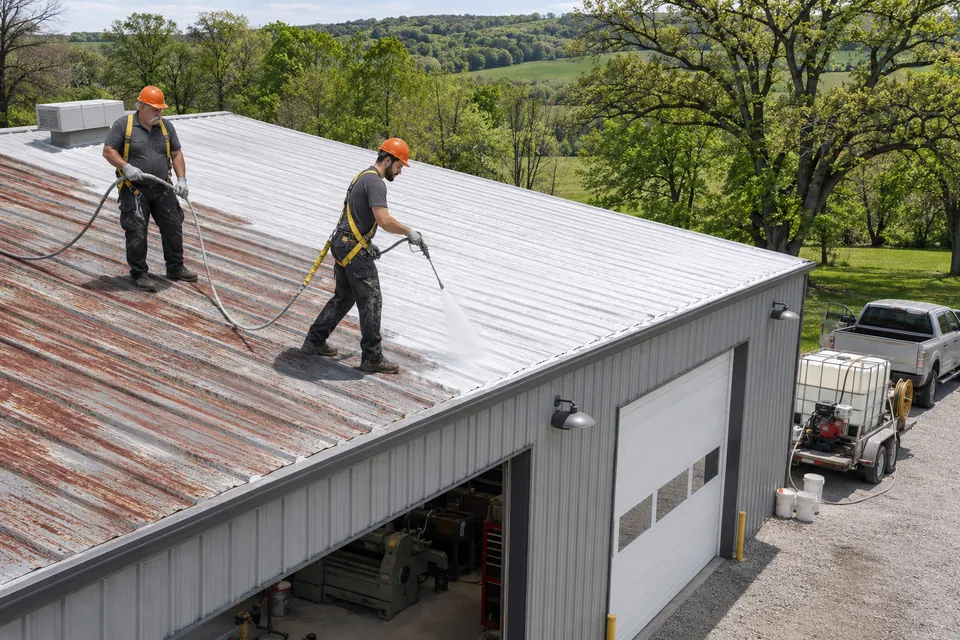
Most Omaha metal roof coating jobs start with one of these six conditions. Each one tells us what has to be fixed before the coating goes on.
Loose screws are the most common leak point on an exposed-fastener roof. Heat and cold work them loose, the washers crack, and water follows the shank. We tighten or upsize each one and seal the heads.
Panel side laps and end laps open as the roof expands and contracts each season. Water runs along the rib and drips at the purlin. Fabric and seam sealer close the lap before coating.
Rust bloom around cut edges, screw heads, and gutters shows up on older galvanized panels. Loose scale comes off by wire brush or grinder, then a rust-inhibiting primer goes on the bare spots.
Water that sits in box gutters and at low end laps after rain breaks down water-based coatings. Clearing the drains and using silicone in those areas keeps the film intact.
Hail leaves dents across panels and can split older paint or the sealant at the laps. Dents rarely leak on their own; split sealant does. We mark each spot during the roof walk.
Stains on ceiling tile or wet spots on racking often trace back to a curb, a skylight, or a single lap several feet uphill. Finding that entry point comes before any coating price.
Five systems cover the commercial roofs we see across Omaha. Each card lists the buildings where it fits and what we check before it goes on.
 Screwed Laps
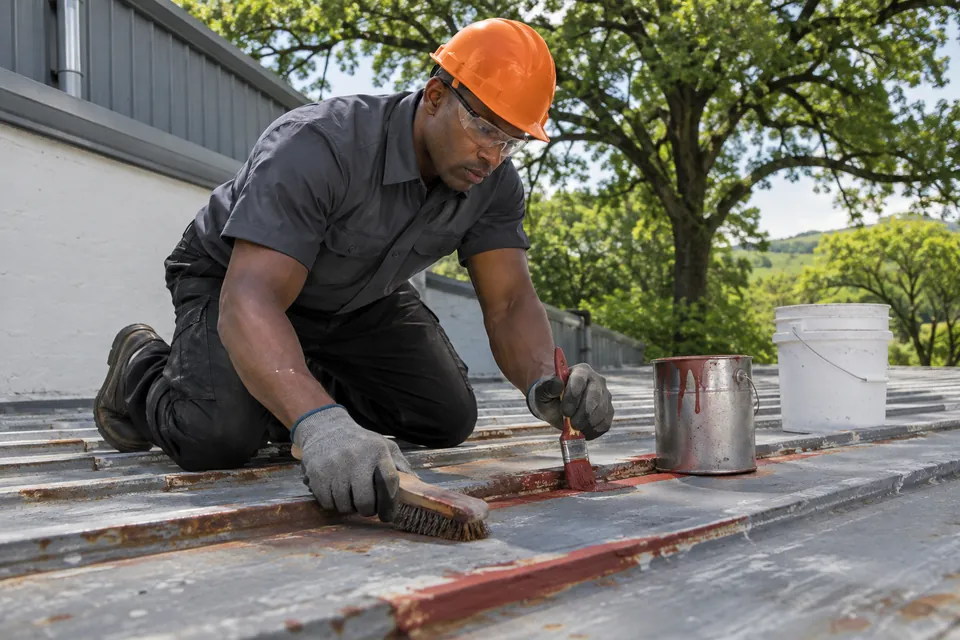
A primer, detail coat, and full base and top coat over exposed-fastener R-panel or standing-seam roofs. Screws, laps, and rust get handled first so the coating bonds to clean, firm metal.
 Low-Slope Laps
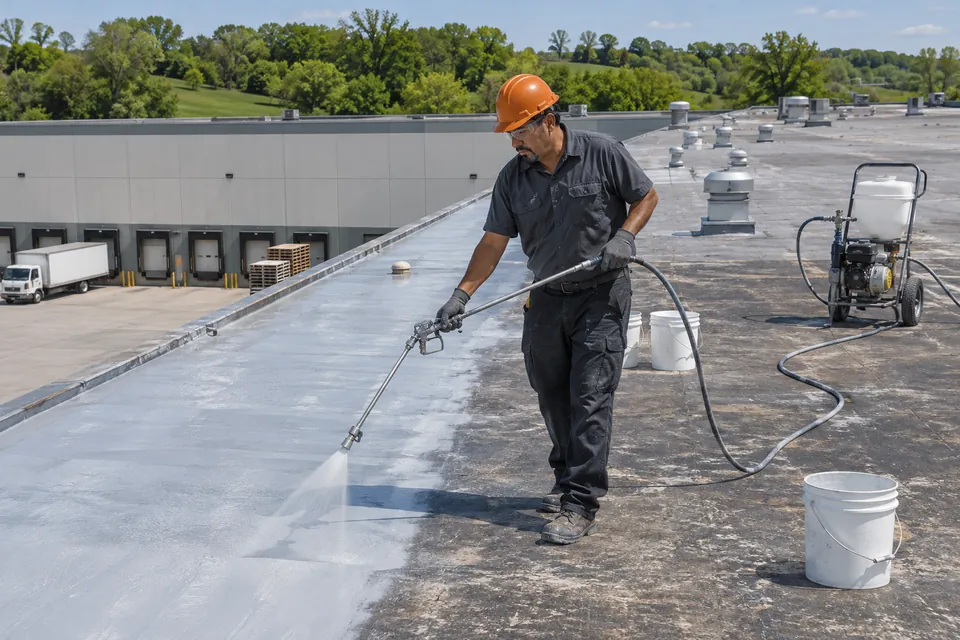
High-solids silicone fits low-slope metal and flat sections where water sits after a storm. It goes on thick in one or two passes and holds up to ponding near drains.
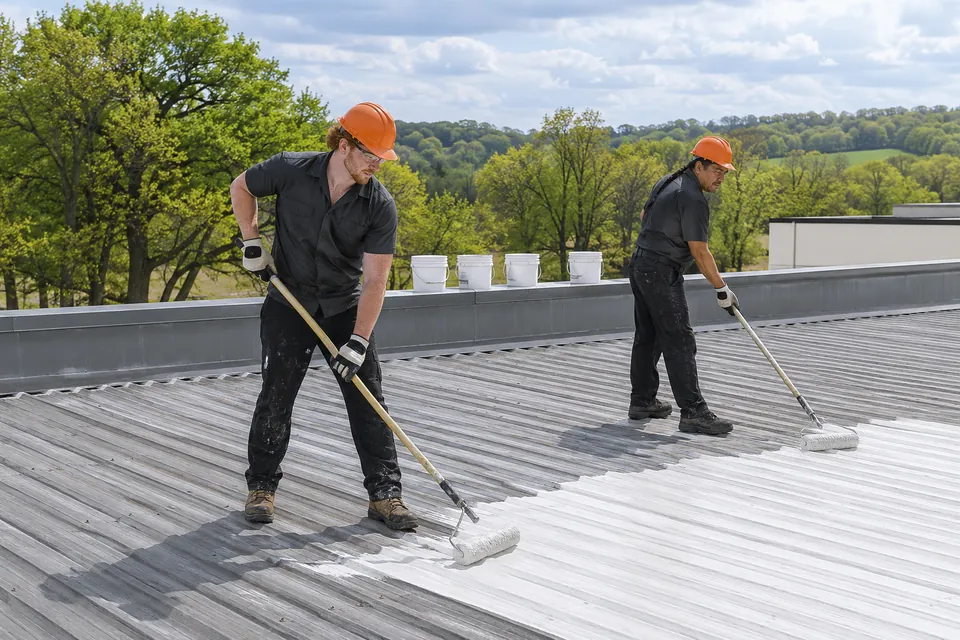 Ribbed Panels
Water-based acrylic fits sloped metal roofs that shed water fast. It stays flexible through heat and cold, reflects sun while clean, and takes another coat of acrylic easily later.
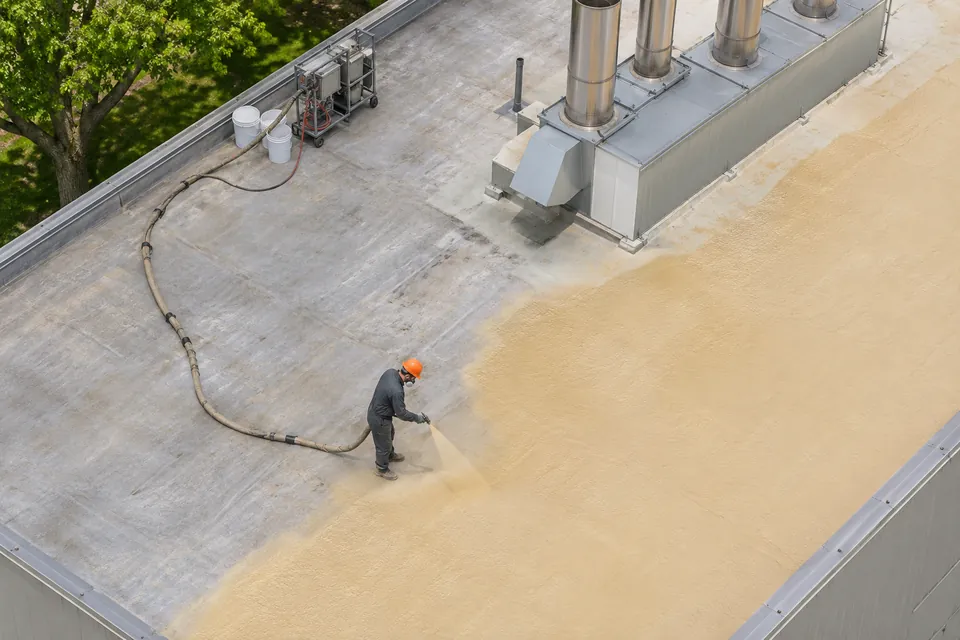 Fully Adhered
Closed-cell foam sprayed over metal or flat roofs fills seams and screw lines in one layer and adds insulation on top. A UV-resistant topcoat protects the foam from sun and hail.
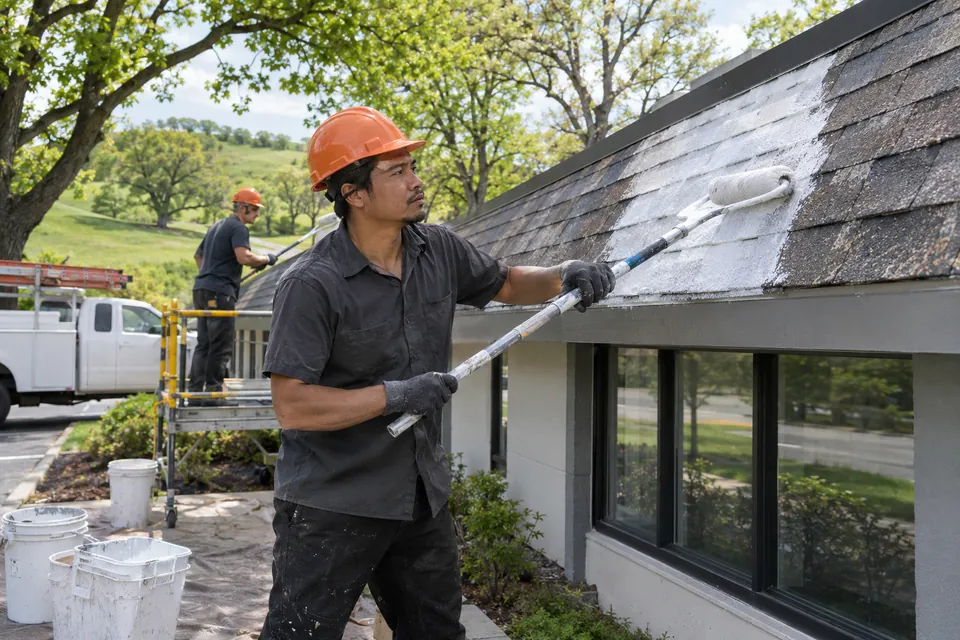 Asphalt Tabs
Coating over asphalt shingles seals granule loss and hairline cracks on commercial mansards, entries, and sloped sections. It fits shingles that still lie flat and stay firmly nailed.
Call and describe where the water shows up inside. We set a roof walk and trace the leak to the lap, screw line, or curb behind it.
Find the condition closest to what you see on your roof. Full dots mark the job that usually fits; the roof walk confirms it.
| What You See On The Roof | Coat Now | Repair, Then Coat | Replace First |
|---|---|---|---|
| Chalky paint, light rust, dry insulation | Usually Fits | Sometimes | Rarely |
| Loose screws and open laps on firm panels | Sometimes | Usually Fits | Rarely |
| Water ponding in box gutters and at end laps | Rarely | Usually Fits | Rarely |
| Rust holes through several panels | Rarely | Usually Fits | Sometimes |
| Wet insulation across large areas | Rarely | Sometimes | Usually Fits |
| Sagging purlins or a soft deck | Rarely | Rarely | Usually Fits |
Both jobs stop leaks. Here is how they compare on the points owners ask about most, with our planning rates per square foot.
| Roof Factor | Coat The Roof | Replace The Roof |
|---|---|---|
| Planning cost | About $2.50 to $4.00 per sq ft | About $5 to $8 per sq ft |
| Building use during work | Open; all work stays on the roof surface | Sections opened to weather during tear-off |
| Debris | Wash water and empty pails | Old panels, screws, and insulation hauled off |
| Existing panels | Stay in place, cleaned and primed | Removed and replaced |
| Insulation | Kept if dry; wet sections cut out | Replaced with the new roof |
| Later upkeep | Yearly walk and a topcoat renewal | Yearly walk and screw and seam repairs |
Every job runs in the same order. Weather can move a step to another day, but every step happens.
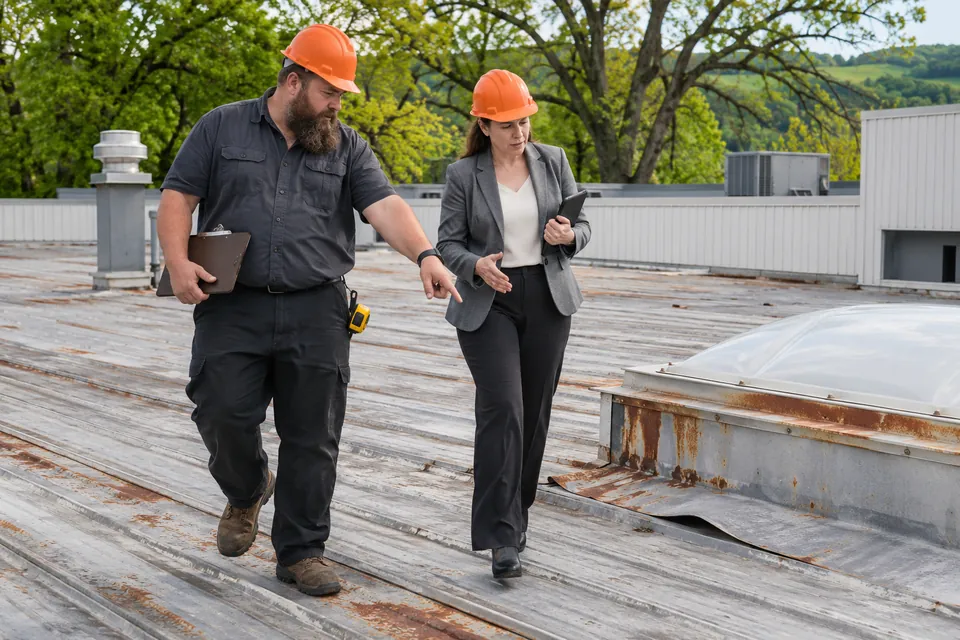
We walk every panel run, test suspect areas for wet insulation, and photograph screw lines, laps, gutters, and curbs. You get a written list of repairs and the coating system we recommend.
Stripped screws are replaced with oversized fasteners, rusted-through panels are patched or swapped, and clogged gutters and drains are cleared so water leaves the roof.
Panels are pressure-washed, loose rust is ground off, and a rust-inhibiting primer goes on bare metal. Chalky paint gets washed until the coating can grip it.
Every lap, curb, and penetration gets fabric or seam tape set in a detail coat, and each screw head gets its own dab before the field coats start.
Base and top coats go on at the specified dry mil thickness. We take wet-mil readings as we go and finish with a walk to touch up thin spots.
Strip centers, shop buildings, and farm structures in these towns are where we coat metal roofs most. Building somewhere else? Call us or send us a message.
Strip-center roofs where tenants stay open and a rooftop unit sits over each storefront.
Ralston metal roof coatingShop and storage buildings that often share one property and one roof schedule.
Bennington metal roof coatingCommercial roofs priced and scheduled around the late-spring-to-fall coating season.
Waterloo metal roof coatingFarm and ag business roofs where we confirm which local code applies before work starts.
Scribner metal roof coatingOlder metal roofs that need a round of screw and lap repairs before they take a coating.
Lyons metal roof coatingOwners ask these before the first roof walk. All 35 answers are on our metal roof coating FAQ.
Plan on about $2.50 to $4.00 per square foot to coat a commercial metal roof here, and about $5 to $8 to replace it. Rust work, screw count, lap reinforcement, coat count, and roof access set where your building lands in that range.
Coating life follows film thickness, prep, and upkeep. A thicker system, a clean bond, and a walk after each hail season keep it working longer, and a recoat over a well-adhered film extends it again with nothing torn off.
Yes, when the rust sits on the surface and the steel underneath is firm. We grind off loose scale, prime the bare spots, and patch or replace any panel that has rusted through before the coating goes on.
Large low-slope warehouse roofs with firm panels and dry insulation are the best match. The coating closes every lap and screw hole in one film while racking, docks, and offices below keep running.
Omaha issues commercial permits for re-roof and roof repair work, and coating has no permit type of its own. We ask the city's Building and Development Division whether your coating scope needs one before we schedule.
Tell us the roof size and what you see from inside. We walk the roof and price the coating system that fits it.