Freeze-Thaw at Laps
Winter freeze and thaw pushes water into laps and screw holes. Those spots get resealed in early spring.
As a Waterloo metal roof coating contractor, we schedule coating work in the dry, mild stretch from late spring through fall.
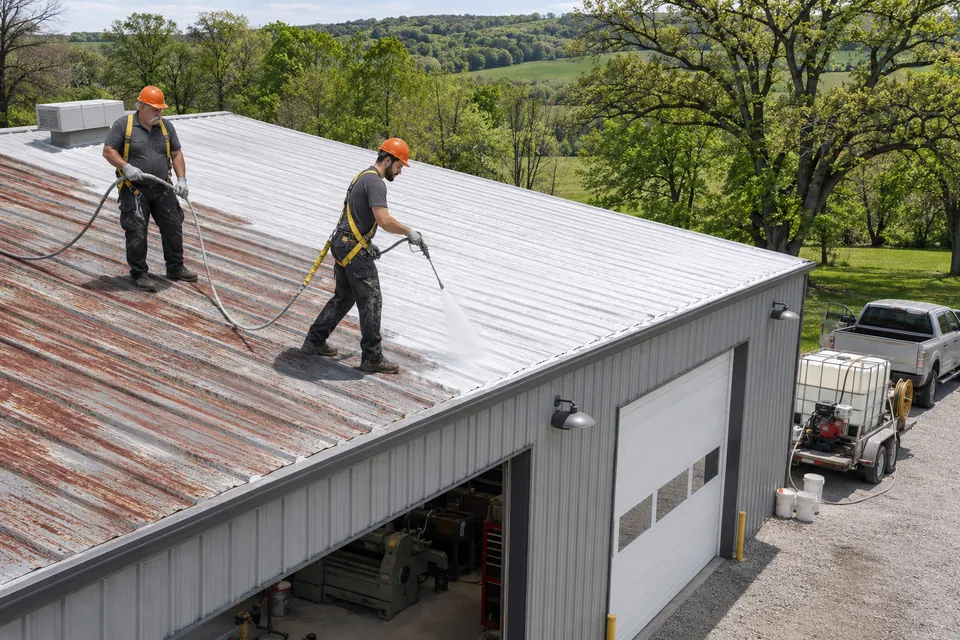
Waterloo metal roof coating runs on a calendar. Coatings need dry panels and air and surface temperatures above the maker's minimum while they go on and cure, so most work lands between late spring and fall.
A roof walk early in the year leaves time for repairs before the coating window opens.

Each season leaves its own marks on a metal roof. These four get fixed before the coating window.
Winter freeze and thaw pushes water into laps and screw holes. Those spots get resealed in early spring.
Hail dents panels and splits old paint. We mark the damage on the walk and decide which panels need replacing.
Wind lifts edge trim and ridge caps. Loose trim gets fastened down before coating, since coating will not hold a loose edge.
Leaves pack gutters and hold water against end laps. Clearing them is part of every fall roof visit.
Hot afternoons expand panels and stretch laps and screw washers. That daily movement is why lap reinforcement comes before any field coat.
Heavy spring rain finds every cracked curb flashing and open vent boot. Those details get rebuilt early so the coating window is spent coating.
Coating inside the season protects the panels before winter. Here is how that compares with a replacement booked into the same window.
| Roof Factor | Coat The Roof | Replace The Roof |
|---|---|---|
| Time on the roof | Days per section | Longer for tear-off and new panels |
| Winter readiness | Laps and screws sealed before freeze | Same, once the roof is done |
| Planning cost | About $2.50 to $4.00 per sq ft | About $5 to $8 per sq ft |
| Building during work | Open the whole time | Sections opened to weather |
| After a hail season | Patch the coating with the same system | Repair dented panels |
Weather windows differ by system. Here is how each one fits a Waterloo schedule.
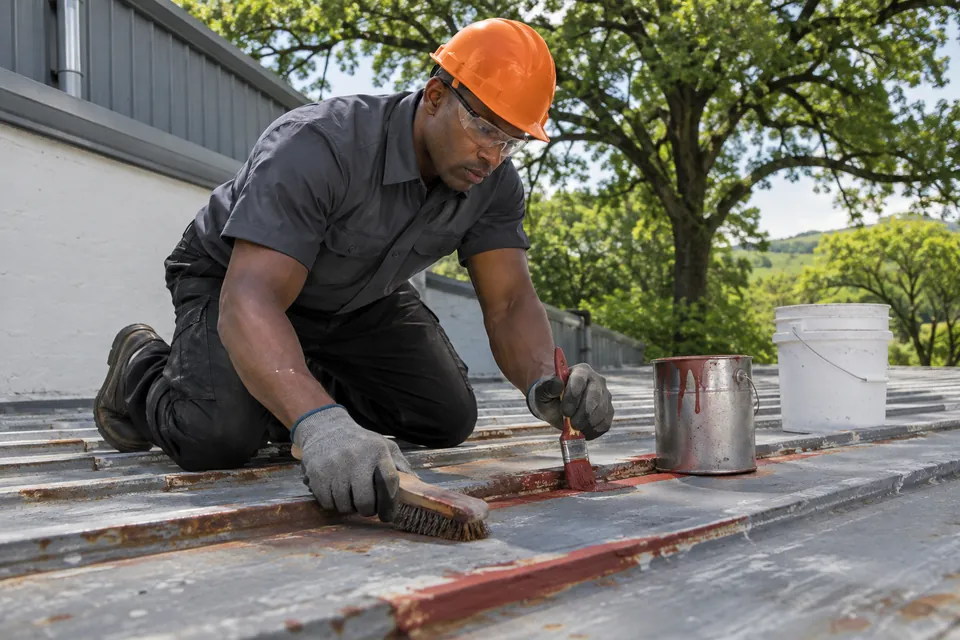
Metal coating over primer needs a dry stretch for washing, rust priming, lap detailing, and two field coats, so it is booked into the steadiest weeks of the season.
Metal roof coating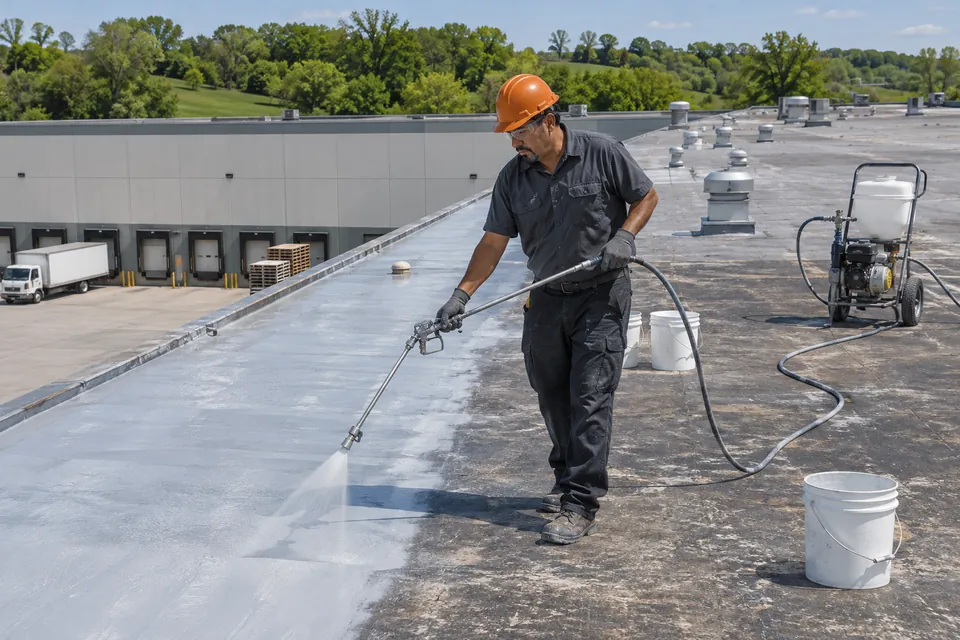
Silicone cures in cooler, damper weather than acrylic, so it fits the early and late edges of the season on low-slope sections that hold water.
Silicone roof coating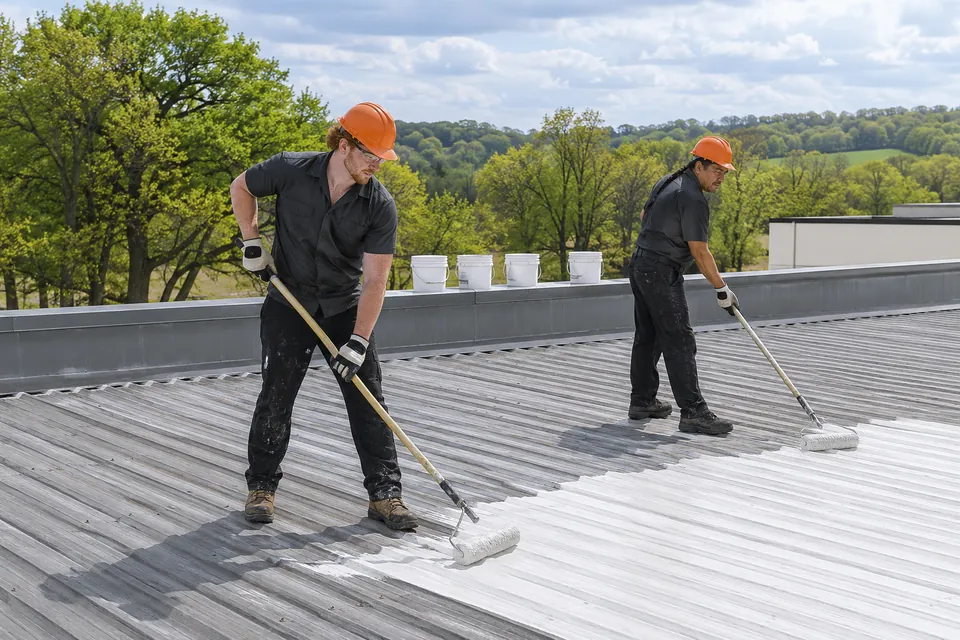
Acrylic needs warm, dry days and no rain before cure, so it fills the middle of summer on pitched metal panels that shed water fast.
Acrylic roof coating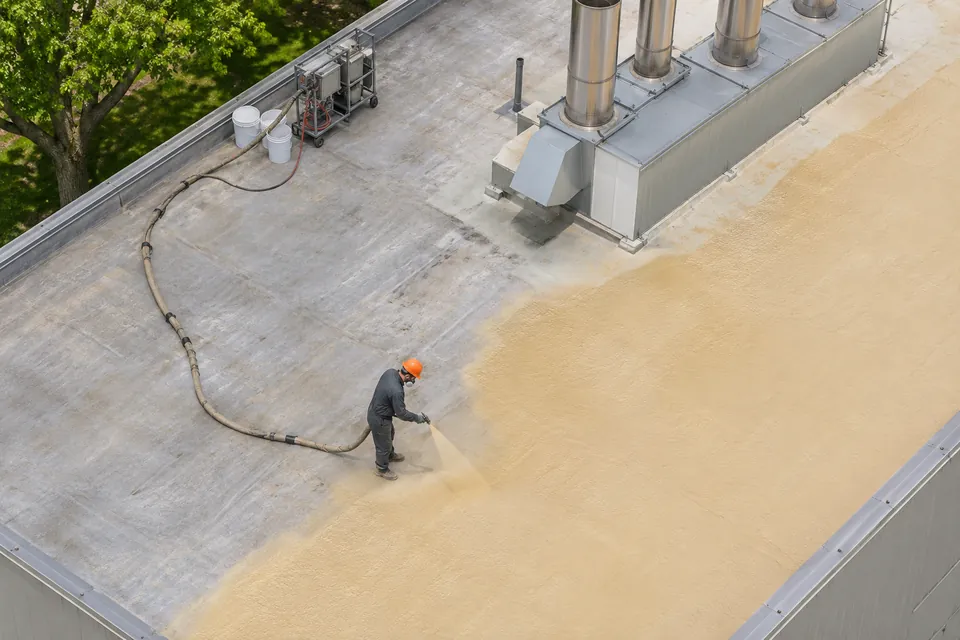
Spray foam needs dry panels and calm wind to control overspray around the building, so foam days are picked from the forecast close to the date.
Spray foam roofing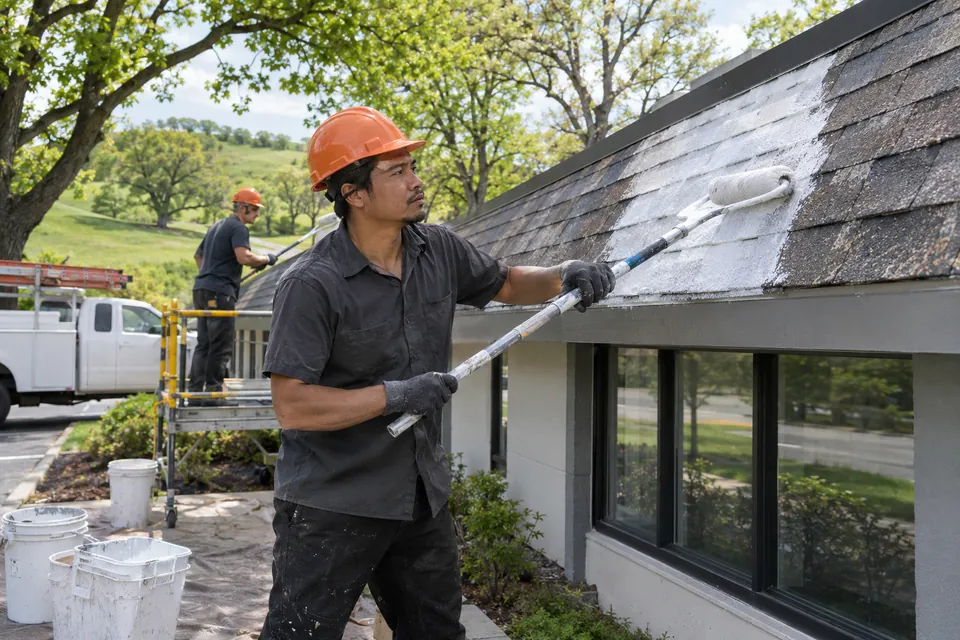
Shingle coating fits mild days when the shingles are dry and cool enough to walk without scuffing granules loose from the tabs.
Shingle roof coatingCall now and we will walk the roof, list repairs, and book a coating slot before cold nights arrive.
This is the order we follow, with the time of year each step usually lands.
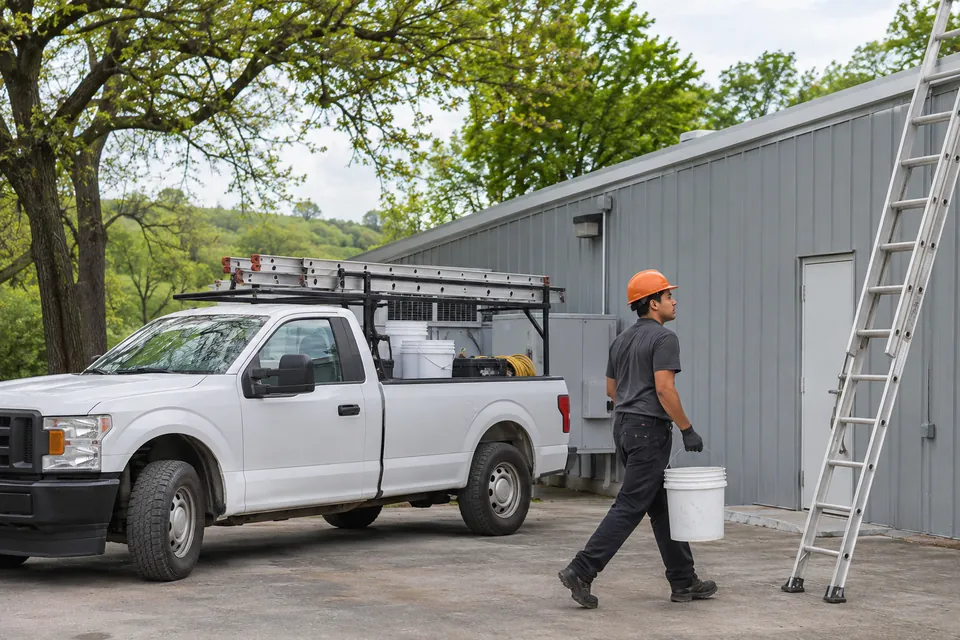
Done in any season. We record laps, screws, rust, curb flashing, and hail marks across the panels, and take moisture readings anywhere a ceiling stain shows inside.
Screws, edge trim, ridge caps, and gutters get fixed in early spring or on any dry winter day, ahead of the coating window, so coating days go to coating.
We pick a stretch of dry days with air and panel temperatures above the coating maker's minimum and no rain in the cure window, then confirm with you.
Panels are cleaned, rust is primed, laps and curbs get their detail coat, and base and top coats go on during that window, section by section.
Before winter, a short roof walk confirms drains and gutters are clear, edges are tight, and the coating is intact across every lap and screw line.
We also coat roofs in these towns. Somewhere nearby? Call us or send us a message.
Timing and pricing questions from Waterloo owners.
From measured roof area and condition. Coating plans at about $2.50 to $4.00 per square foot; rust work, screws, laps, coat count, and access set the final number. Replacement plans at about $5 to $8.
The coating rate stays the same. What changes is scheduling: repairs done early leave room in the coating window.
We inspect and repair in winter when panels are dry. Coating itself waits for temperatures above the maker's minimum.
Early in the year. A winter or early-spring roof walk gives time to fix screws and trim before the coating slots fill.
Work stops before rain, open pails get covered, and coating resumes once the panels dry. Sections already cured stay protected.
On smaller roofs, yes, when the weather window lines up. Larger roofs often get repairs in early spring and coating later, so each step lands on the right kind of day.
Coating applied above the maker's minimum temperature and cured before the first hard freeze holds up fine. We stop booking coating once cold nights would arrive before the film cures.
Look for drips at laps and screws after the first thaw, lifted trim after wind, and wet ceiling tiles near curbs. Those signs set the spring repair list.
Book a roof walk now and get a coating slot in this season's window.