Chalky Factory Paint
Years of sun turn panel paint powdery, and coating over chalk peels. A cleaner and pressure wash take the chalk off until a tape test comes up clean.
As an Omaha acrylic roof coating contractor, we roll and spray water-based acrylic over pitched metal roofs that shed water quickly.
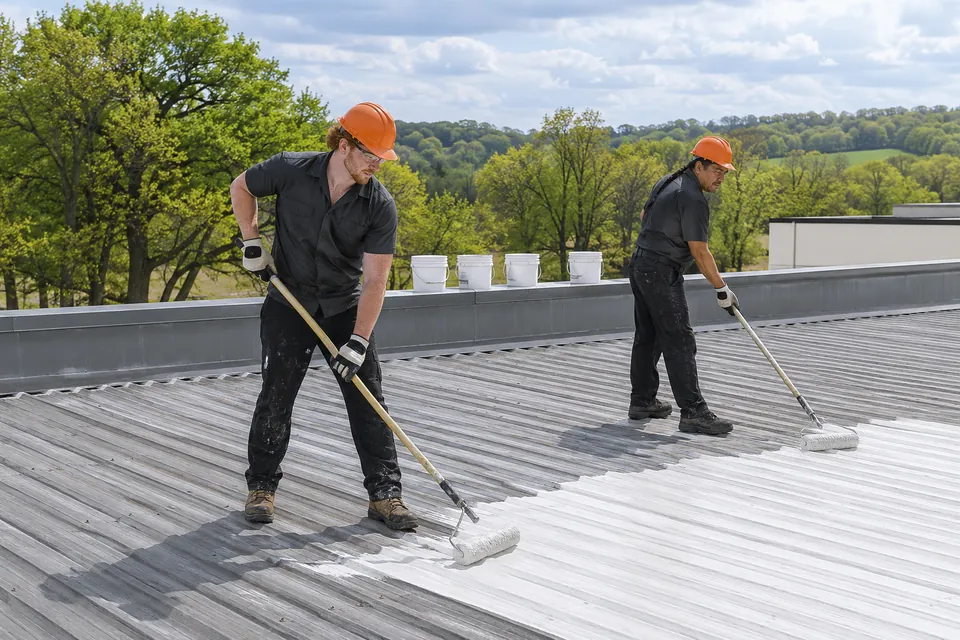
Omaha acrylic roof coating suits roofs with enough slope to drain within a day of rain. Find your roof below to see which job usually fits.
| What You See On The Roof | Coat Now | Repair, Then Coat | Replace First |
|---|---|---|---|
| Pitched R-panel with chalky, faded paint | Usually Fits | Sometimes | Rarely |
| Sloped metal leaking at a few screws | Sometimes | Usually Fits | Rarely |
| Low spots that hold water for days | Rarely | Sometimes | Rarely |
| Old acrylic coating worn thin but still adhered | Usually Fits | Sometimes | Rarely |
| Rusted-through panels along the eave | Rarely | Usually Fits | Sometimes |
Acrylic bonds well to clean, primed metal. These four conditions get handled first.
Years of sun turn panel paint powdery, and coating over chalk peels. A cleaner and pressure wash take the chalk off until a tape test comes up clean.
Eaves and end laps stay damp longest, so rust starts there first. We grind loose rust and prime bare steel before the acrylic base coat.
Acrylic breaks down where water stands for days, so dented panels and sagging gutters get repaired or treated with a ponding-rated product.
Hail can bruise and split an older coating. Split areas get cut back, primed where metal shows, and rebuilt with the same acrylic system.
Acrylic comes in a few builds. The panel finish and the slope decide which one your roof gets.
| Option | Where It Fits | Prep It Needs |
|---|---|---|
| Two-coat acrylic over primer | Pitched R-panel with chalky paint | Wash, rust primer, screw seals |
| Acrylic with fabric at laps | Panels leaking at side and end laps | Lap fabric in a base coat |
| Acrylic recoat over old acrylic | Worn but well-adhered acrylic | Clean, spot-prime, one or two coats |
| Elastomeric acrylic plus butyl tape | Standing seam with failed seam sealer | Tape seams, then field coats |
Acrylic keeps your panels in place and gives the roof a bright, flexible film. Here is how that compares with new panels.
| Roof Factor | Coat The Roof | Replace The Roof |
|---|---|---|
| Planning cost | About $2.50 to $4.00 per sq ft | About $5 to $8 per sq ft |
| Panel surface in summer | Light film reflects sun while clean | Set by the new panel color |
| Movement in cold snaps | Film flexes with the panels | New panels still move at screws |
| Tenants and staff below | Low odor, work on the roof only | Noise and openings during tear-off |
| Next recoat | More acrylic over a clean surface | Repairs at screws and laps as they age |
Call and tell us the roof's slope and age. We bring a cleaner and tape to the roof walk to test how well the paint holds.
Acrylic needs dry panels and mild weather to cure, so scheduling matters as much as the steps.
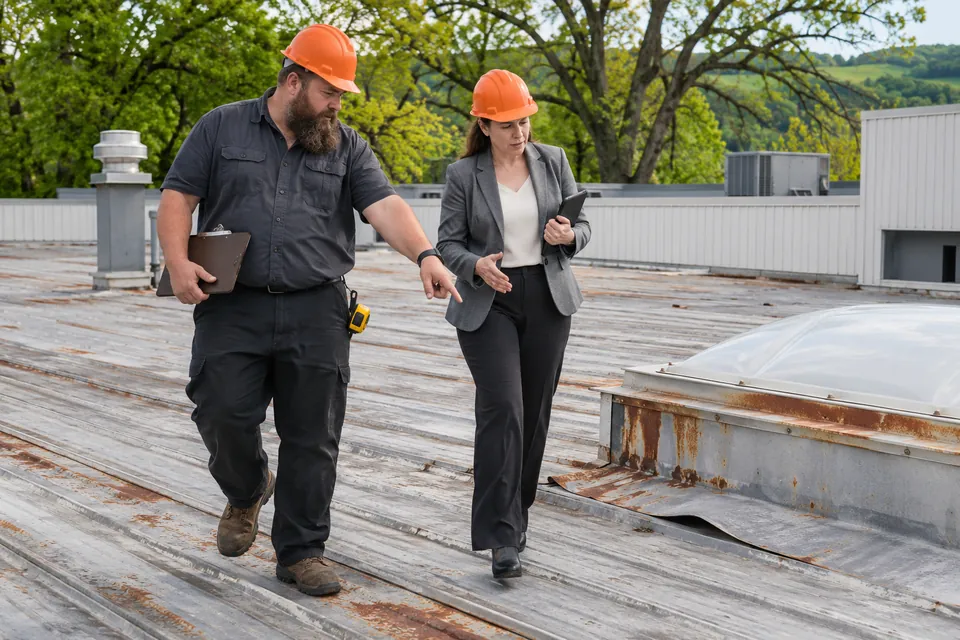
We check slope and drainage, tape-test the paint for chalk, mark rust and failed screws, and note any low spots that hold water.
Acrylic cannot go down ahead of rain or cold nights, so we watch the forecast and book stretches of dry, mild days for the coating work.
Panels are washed until chalk is gone, rust is ground back, and primer goes on bare steel before it can flash-rust.
Every lap gets fabric in a base coat, curbs and vents get rebuilt flashing, and each screw head gets a dab of acrylic.
Base and top coats go on in contrasting colors so coverage is easy to see, each to its specified thickness.
Three systems owners compare with acrylic for the same building.
Flat sections or box gutters that pond take silicone, even when the pitched roof gets acrylic.
Silicone roof coatingThe full metal build adds screw replacement and lap work for roofs with many leaks.
Commercial metal roof coatingMansards and shingled entries on the same building can be coated at the same time.
Shingle roof coatingShort answers about acrylic on metal roofs in this climate.
Acrylic is water-based, so rain or near-freezing temperatures before it cures will damage it, which shortens the season. It also wears out where water ponds for days. Low spots need repairs or a different product.
Thickness, slope, and sun exposure set it. Acrylic weathers thinner year by year, so a thicker first build lasts longer before a recoat. Clean acrylic accepts more acrylic, which keeps the next round simple.
It plans within about $2.50 to $4.00 per square foot. Material costs less per gallon, but acrylic usually takes more coats to reach thickness. Prep, rust, lap work, and roof size place your building in the range.
On pitched metal that drains quickly, yes. Acrylic grips primed steel, flexes as panels move, and reflects sun while clean. Rust still gets primed and laps still get reinforced first.
Hail dents panels and can split or bruise the coating. Dents by themselves seldom leak, but split film lets water reach steel. After a storm we mark damaged spots and patch them with the same acrylic.
A gray or tan base coat under a white top coat shows the crew and you where coverage is thin. Any spot where the base color shows through gets another pass before we sign off on that section of roof.
Each maker lists its own minimum air and surface temperature and a rain-free window after application. We follow the product sheet for your coating and plan the days so the film cures on the panels before evening dew or a cold front arrives.
Clean, firmly attached acrylic takes new acrylic well. Silicone underneath rules acrylic out, since acrylic will not stick to it. A quick adhesion test on your roof confirms what is there and which primer, if any, the new coat needs.
Send the slope and size of your metal roof, and we price an acrylic system for it.