Moisture in the Roof
Wet insulation under foam stays wet. Moisture readings and core samples show which areas are dry and which get cut out and replaced first.
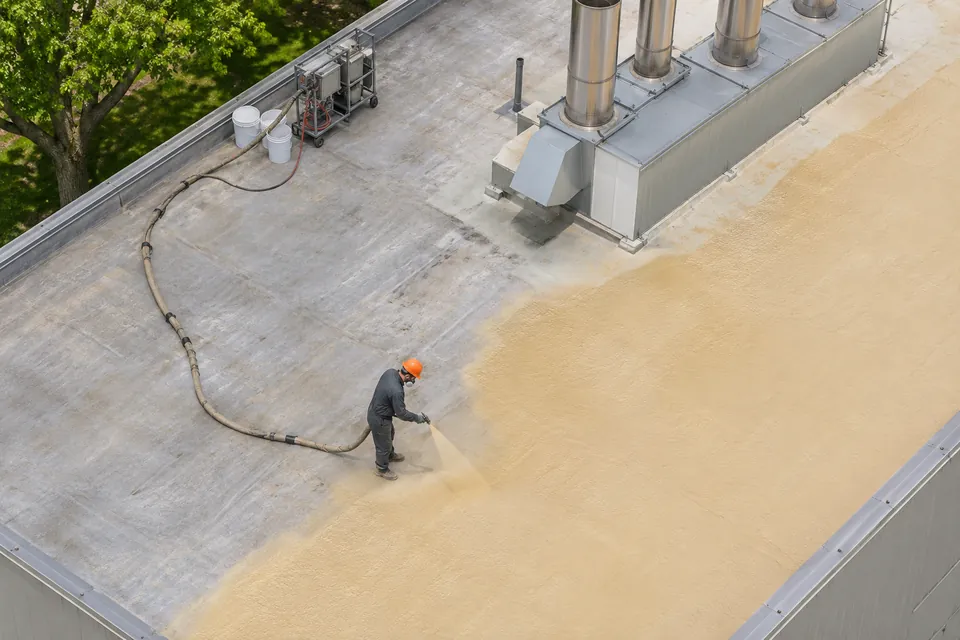
As an Omaha spray foam roofing contractor, we spray closed-cell foam over dry metal and flat roofs, then seal it with a UV-resistant topcoat.
Omaha spray foam roofing works on dry, firm metal and flat decks. Find the condition closest to your roof to see which job usually fits.
| What You See On The Roof | Coat Now | Repair, Then Coat | Replace First |
|---|---|---|---|
| Metal building that leaks and feels cold inside | Sometimes | Usually Fits | Rarely |
| Flat roof with many small leaks | Sometimes | Usually Fits | Rarely |
| Old foam roof with a chalky topcoat | Usually Fits | Sometimes | Rarely |
| Wet insulation under most of the roof | Rarely | Sometimes | Usually Fits |
| Rooftop air intakes close to the work area | Sometimes | Usually Fits | Rarely |
Foam bonds only to dry, clean surfaces, and it needs a plan for the building's air intakes. These four checks come first.
Wet insulation under foam stays wet. Moisture readings and core samples show which areas are dry and which get cut out and replaced first.
Sprayed foam covers panels, laps, and screw lines in one layer, so water has no gap to follow. It keeps them closed only while the topcoat stays intact and the panels below stay dry.
Overspray drifts, so makeup air units and intakes get masked, shut down, or scheduled around. We plan that with your maintenance staff before the rig arrives.
Foam can be sprayed thicker at low spots to help water drain. Depth also sets insulation value, so it is decided on the roof walk.
Foam jobs differ by what sits underneath and which topcoat goes on top.
| Option | Where It Fits | Prep It Needs |
|---|---|---|
| Foam over metal panels | Leaking, uninsulated metal buildings | Clean, prime rust, fasten loose panels |
| Foam over built-up roof | Dry BUR with many small leaks | Remove wet areas, clean, vacuum gravel |
| Foam with silicone topcoat | Flat roofs that still pond a little | Topcoat to specified mils |
| Foam recoat | Older foam with a worn topcoat | Clean, repair dings, new topcoat |
Foam closes the roof and adds insulation without tearing it off. Here is how it compares with a full replacement.
| Roof Factor | Coat The Roof | Replace The Roof |
|---|---|---|
| Planning cost | Priced per roof by foam depth and topcoat | About $5 to $8 per sq ft |
| Heat loss through the roof | Foam adds insulation on top | Set by the new insulation board |
| Seams and screw lines | Covered by one continuous layer | New seams and new fasteners |
| Building use during work | Stays open with intakes managed | Sections opened to weather |
| Long-term upkeep | Inspect and renew the topcoat | Repair seams and flashing as they age |
Call and describe the color and texture of your foam roof. Bare yellow or brown foam means the topcoat needs renewing soon.
Foam jobs move fast once spraying starts, so the prep and planning steps carry most of the work.
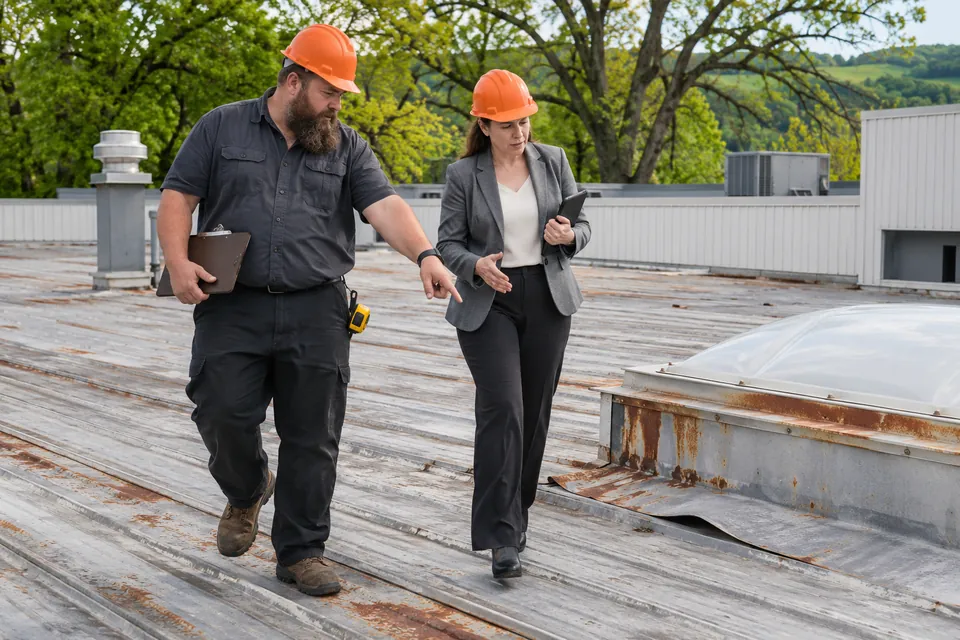
We take moisture readings, cut cores where readings run high, check panel attachment, and locate every intake and unit near the work.
Wet insulation and damaged roofing come out and get replaced, so the foam goes over dry, firm material only.
The roof is cleaned and primed where needed, and intakes, units, and walls get masked against overspray.
Closed-cell foam is sprayed in passes to the planned depth, with extra build at low spots to move water toward the drains.
A UV-resistant topcoat goes on within a day of spraying, to the specified thickness, since sunlight breaks down bare foam.
Three options for roofs where foam is one choice among several.
Metal roofs with dry insulation and few leaks can take the metal coating build without foam.
Commercial metal roof coatingSilicone tops many foam roofs and also coats low-slope sections that need no added insulation.
Silicone roof coatingAcrylic works as a foam topcoat on sloped areas that drain quickly.
Acrylic roof coatingWhat owners ask before choosing foam.
Foam is priced per roof after we measure the area and set a foam depth. Thicker foam adds insulation and material, and the topcoat, wet-area removal, edges, and curbs move the total. Coating alone plans at about $2.50 to $4.00 per square foot.
As long as its topcoat keeps sun and hail off the foam. The topcoat is the wearing layer; renewing it on schedule keeps the foam underneath working for many years.
When the topcoat chalks, cracks, or wears thin, or bare foam shows through. Spring checks and walks after hail catch those spots. Recoating means cleaning, repairing dings, and a fresh topcoat at the right thickness.
Rarely. Foam and coatings need dry panels and temperatures above the maker's minimum while they go on and cure. Frost and dew block the bond, so most foam work runs from late spring through fall.
Smaller than the first install. The foam stays; the surface is cleaned, damaged spots are cut out and refilled, and a new topcoat is sprayed or rolled to thickness.
Yes, if the panels are dry and firm and the topcoat stays intact. Foam closes every lap, screw hole, and seam under one layer, then the topcoat keeps sun and hail off it. Wet or rotted areas get cut out first.
Closed-cell foam adds insulation in proportion to its depth, and the depth is chosen on the roof walk. The maker's product data lists the value per inch, and we write the planned depth into your proposal so you can compare it with other insulation options.
Overspray control is part of the plan. We watch wind speed, use screens at the roof edge, and move or cover vehicles in the lot next to the work. Spraying stops when wind picks up past the limit set for the job.
Tell us the roof type and how the building heats and cools. We check moisture and price a foam system.